Learn How You Communicate & Lead
Explore Yourself
Take DISC Profile Assessment: Online Personality Test
 The Ultimate Guide to Free DISC: Understand Your Behavioral Style
New Updates

A Complete Guide to the DISC Model for Behavioral Insights
What Is the DISC Model
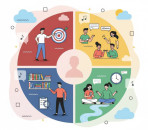
The DISC model decodes observable behavior into four clear styles, Dominance, Influence, Steadiness, and Conscientiousness, so...
Understanding DISC Profile: A Comprehensive Guide to Behavior and Communication
What DISC Brings to Modern Teamwork and Leadership
Behavioral frameworks help teams communicate with clarity and speed. In practice, the DISC profile...

The Definitive Guide to the DISC Test for People, Teams, and Leadership
What the DISC Framework Is and Why It Matters
Organizations of every size use the DISC framework to decode how people approach problems, pace, influe...
Take DISC Personality Assessment
Get StartedDISC Assessment Online: Discover Your Unique Behavior Style
People everywhere recognize that a simple, memorable language can decode how we show up under pressure and in routine. In practical terms, the DISC assessment meaning links everyday behaviors to observable patterns without boxing anyone in. That clarity helps teams DISCuss differences with less judgment and more curiosity. Over time, a shared vocabulary reduces escalation and builds psychological safety because people can describe preferences without pathologizing colleagues.
The origins trace back to William Marston’s theory of emotions, and later instruments translated ideas into measurable patterns. Within modern practice, the DISC model organizes tendencies across four lettered styles that shape pace, priority, and response to risk. Rather than a diagnosis, it functions like a map that highlights likely routes people prefer to take. Because maps are not the territory, wise practitioners always anchor interpretations in context, goals, and current constraints.
An essential nuance is that behavior changes with context, feedback, and environment. Because language influences perception, the term DISC personality sometimes gets used as shorthand even though the instrument captures outward behavior more than inner traits. Keeping that distinction front and center prevents misuse and promotes ethical interpretation. When people understand that preferences are adaptable, they lean into growth instead of clinging to labels, and they experiment with new strategies to meet the moment.

Practical Benefits for Individuals, Teams, and Organizations
Organizations adopt the framework to improve collaboration, reduce friction, and accelerate onboarding. For an individual, a well-written DISC profile can illuminate triggers, motivators, and blind spots that were previously hard to articulate. Managers then use that insight to tailor feedback and set clearer expectations. As confidence grows, employees make more deliberate choices about pacing, detail, and influence, which compounds into stronger results.
Across departments, a common language shortens meetings and defuses misunderstandings before they escalate. When teams share a baseline such as the DISC workplace profile, they can normalize differences and design rituals that respect varied pacing and detail needs. Cross-functional projects become easier because collaborators anticipate how others prefer to plan, decide, and escalate issues. In practice, this means fewer handoff errors and more reliable commitments. Leadership pipelines benefit when development plans deliberately stretch strengths while protecting energy. As responsibilities grow, a tailored DISC leadership assessment highlights how influence, delegation, and conflict style evolve under larger stakes. Executive coaches then pair that insight with situational tactics, so leaders can switch gears between crisis mode and long-horizon strategy. The result is steadier decision quality, crisper communication, and healthier team climates.
- Sharper self-awareness that translates into daily habits.
- Faster conflict de-escalation through shared norms and signals.
- Clearer role design that aligns strengths with critical outcomes.
- Onboarding shortcuts that reduce time-to-impact for new hires.
Interpreting Results and Turning Insight Into Action
Taking an instrument is only the beginning; the real value arrives when insights translate into experiments. After receiving results from a DISC test, you can craft micro-commitments such as adjusting meeting openings or narrowing decision options. Small tweaks, repeated consistently, create measurable improvements in trust and throughput. Teams benefit most when individuals share takeaways openly and invite peers to suggest specific, observable behaviors to try.
| Style Focus | Typical Strength | Common Stretch | Action Tip |
|---|---|---|---|
| Drive and Results | Decisive momentum | Patience with detail | State the why, then ask one clarifying question before deciding |
| Influence and Energy | Inspiring communication | Follow-through rigor | Summarize next steps in writing and confirm owners |
| Support and Harmony | Steady collaboration | Comfort with change | Pilot a small change with time-boxed review |
| Conscientious Quality | Analytical precision | Speed amid ambiguity | Define an 80% rule and ship a draft for feedback |
Numbers and graphs need a narrative to become actionable. A robust DISC analysis weaves qualitative stories with the data so patterns feel human and grounded in lived work. When people reflect on a recent success or setback through this lens, the abstract quickly becomes practical. That reflective loop makes it easier to choose strategies that fit the next high-stakes moment.
Group-level insights emerge when patterns recur across many respondents. For larger initiatives, a periodic DISC survey can surface cultural hot spots and track how interventions shift collaboration norms. Leaders then adjust meeting cadences, decision rights, or workflows based on evidence rather than anecdotes. Over quarters, those small refinements compound into a healthier culture and tighter execution.

Implementation, Ethics, and Avoiding Common Pitfalls
Sustainable adoption happens when learning is continuous rather than a one-time event. Rolling refreshers and scenario workshops make DISC training stick, especially when leaders model the vocabulary in everyday decisions. Internal champions can host short huddles where people share experiments that worked, which keeps momentum alive. Measurement should focus on observable behaviors, not labels, to maintain forward progress.
Ethical use keeps the focus on growth, not gatekeeping. In hiring or promotion, a responsible DISC personality assessment should never operate as a pass–fail filter and must be paired with role-relevant evidence. Clear consent, transparent feedback, and easy opt-out pathways are nonnegotiable features of a trustworthy program. When people feel respected, they engage deeply and apply the insights more rigorously.
Governance also matters, from data privacy to vendor selection and scientific rigor. When purchasing tools, insist on a publisher that explains how the DISC assessment was validated, normed, and updated for diverse populations. Independent reviews, technical manuals, and periodic audits protect both participants and the organization. With safeguards in place, the framework elevates performance while honoring individual dignity.
- Do define clear use cases and success metrics before rollout.
- Do coach managers to translate insights into specific behaviors.
- Don’t reduce colleagues to letters or overgeneralize findings.
- Don’t store reports without strict access controls and retention limits.
Take DISC Personality Assessment
Get StartedFrequently Asked Questions
-
What does this framework actually measure compared to personality theories?
It captures observable behavioral preferences in how people approach problems, pace, and collaboration, rather than deep-seated traits. For newcomers exploring options, many start by looking for a DISC assessment free resource as a low-friction introduction to the concepts. The most valuable part is learning a neutral language that improves real conversations at work.
-
How accurate are results, and can they change over time?
Quality instruments demonstrate reliability, yet results can shift with role demands, stress, and deliberate practice. To experiment safely, some users try a DISC personality test free option before investing in a comprehensive report with coaching. The key is interpreting patterns with context, not treating any snapshot as destiny.
-
How should managers introduce this approach to a team?
Start with voluntary participation, explain the purpose, and model vulnerability by sharing your own insights first. Provide time for reflection, then agree on small, observable behaviors the team will test for a few weeks. Celebrate what works and adjust rituals based on feedback rather than assumptions.
-
Is this framework appropriate for hiring decisions?
Use it as a development aid, not a gatekeeper, and never as a sole criterion for selection. Combine multiple methods, work samples, structured interviews, and reference checks to ensure fairness. Keep explicit documentation about how data will be used and stored to maintain trust.
-
Where can someone take it online?
Reputable publishers and coaching firms offer digital versions with secure delivery and guided debriefs. For budget-conscious learners, a vetted DISC assessment online free option can provide a preview before pursuing a fuller diagnostic with facilitation. Always confirm privacy policies and evidence of validity before sharing personal information.