
A Complete Guide to the DISC Model for Behavioral Insights
Take DISC Personality Assessment
Get StartedWhat Is the DISC Model
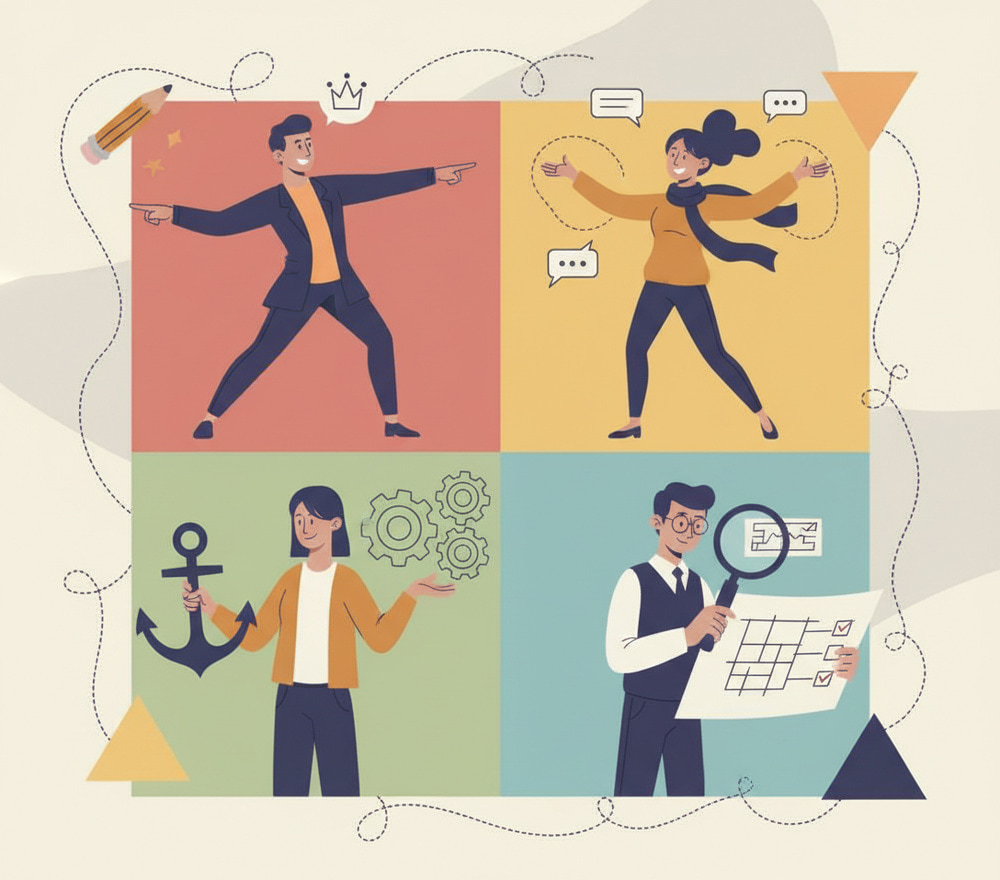
The DISC model decodes observable behavior into four clear styles, Dominance, Influence, Steadiness, and Conscientiousness, so teams can collaborate with clarity and speed. Originating from behavioral psychology, it offers a common language for how people approach problems, pace, procedures, and people, which makes conversations less personal and more productive. Rather than boxing people in, it surfaces situational preferences, giving leaders and contributors a practical lens to navigate conflict, feedback, and decision-making.
In everyday conversations, the DISC assessment meaning ties directly to how this model translates innate tendencies into actionable insights that improve communication. When individuals recognize patterns in their reactions under pressure, they can preempt friction and tailor their approach, whether they are presenting to executives or supporting a customer on a tight deadline. The shift from guessing to understanding saves time, reduces emotional noise, and improves measurable outcomes across sales, service, and project teams.
Many organizations introduce the DISC personality assessment during onboarding or team resets to build psychological safety before tackling big goals. That context makes it easier to normalize differences, amplify strengths, and design workflows that respect each person’s cadence and priorities. With the right framing, the instrument sparks curiosity and growth rather than labels, encouraging reflective, evidence-informed conversations about how to work better together.
- Clear, shared vocabulary for behavior under stress and at rest
- Faster decision-making because roles and communication needs are explicit
- Reduced friction through expectation-setting and practical agreements
- Better coaching conversations anchored in observable behaviors
How the Model Works in Practice
Each DISC style blends energy, pace, and preference for people or tasks, and that interplay shows up in meetings, emails, and deadlines. Visual tools such as the DISC assessment wheel help participants quickly locate their tendencies and anticipate where collaboration may feel smooth or strenuous. As leaders map a team’s spread, they can spot gaps, balance committees, and orchestrate high-stakes initiatives with more intention.
| Style | Core Drivers | Typical Strengths | Watch-outs |
|---|---|---|---|
| Dominance (D) | Results, autonomy | Decisive, bold, fast-moving | Impatience, blunt feedback |
| Influence (I) | Social proof, recognition | Inspiring, persuasive, optimistic | Overpromising, light on details |
| Steadiness (S) | Harmony, stability | Supportive, patient, consistent | Resistance to rapid change |
| Conscientiousness (C) | Accuracy, standards | Analytical, precise, systematic | Overanalyzing, slow decisions |
Beyond the visual, the DISC assessment profile usually includes narrative descriptions, likely stress behaviors, and guidance on how to communicate effectively with adjacent styles. That nuance transforms the tool from novelty into a reliable playbook for feedback, requirements gathering, and retrospective facilitation. In turn, team rituals become easier to run because expectations, cadences, and decision thresholds are explicit.
For deeper coaching, the DISC profile assessment can be paired with role analysis to align responsibilities with natural strengths. When a strategist with high structure preferences owns documentation and a fast-paced partner runs live stakeholder calls, execution accelerates. Over time, leaders adjust workflows to interplay strengths without forcing people to operate against their core energy for prolonged periods.
- Use style-aware agendas to front-load context for analytical peers
- Timebox debate for fast movers while preserving reflection space
- Rotate facilitators so every style contributes its superpower
- Codify team norms for conflict, feedback, and escalation paths
Applications in Teams and Leadership
Executives and frontline managers alike use DISC to build resilient cultures that scale. For leadership development tracks, the DISC leadership assessment highlights how authority, stress, and visibility amplify certain behaviors that either unlock momentum or stall progress. With calibrated coaching, leaders learn to flex, dialing up clarity, empathy, or precision, to meet the moment and the audience.
Recruiters and enablement teams also appreciate how structured measurement streamlines hiring, onboarding, and performance conversations. While it should never be the sole criterion, a well-administered DISC assessment test complements interviews and work samples by surfacing communication preferences that matter on day one. Paired with role scopes, it informs mentorship, pairing, and early wins that compound trust.
- Map communication charters to reduce meeting fatigue and rework
- Design playbooks for cross-functional handoffs that honor style needs
- Craft feedback frameworks that separate data, inference, and impact
- Embed retrospectives that invite both speed and rigor
Getting Started and Finding Quality Tools
You can begin with a small pilot inside one team, collecting qualitative and quantitative feedback to refine your approach. For individuals testing the waters, reputable providers often offer a DISC assessment online free option that previews the framework and basic style indicators. As interest grows, consider moving to validated versions that produce fuller narratives and coaching prompts.
Budget-conscious teams sometimes explore a limited DISC assessment free report to introduce core vocabulary before investing in deeper insights. Facilitation quality matters more than volume, so prioritize a skilled moderator who can translate findings into tangible agreements. Emphasize psychological safety by framing results as preferences, not prescriptions.
When evaluating tools, look for transparent methodology, reliability evidence, and actionable guidance rather than generic platitudes. If you’re simply experimenting, a concise free DISC assessment test can spark DISCussion about collaboration friction and preferred workflows. After the pilot, document lessons learned and scale intentionally with a clear charter and success metrics.
- Choose instruments with clear privacy policies and accessible language
- Train facilitators to handle sensitive topics with neutrality
- Integrate outputs into job aids, playbooks, and onboarding checklists
- Revisit results during milestones, reorganizations, and strategy shifts
FAQ: Practical Answers for Curious Readers
Is DISC a personality test or a behavior framework?
DISC focuses on observable behaviors and preferences rather than diagnosing personality traits. That emphasis keeps feedback concrete, situational, and easier to translate into daily communication habits that actually stick.
How is DISC used inside organizations without creating labels?
Skilled facilitators set norms that treat styles as preferences, not fixed identities, and they emphasize context over caricature. In most implementations, the DISC assessment is framed as a starting point for dialogue, followed by experiments, retrospectives, and adjustments that evolve with the work.
What makes a strong facilitator for team rollouts?
Look for someone who can create psychological safety, connect insights to business outcomes, and redirect conversations from generalizations to specifics. Great facilitators also design inclusive exercises that let every style contribute in a way that feels natural and respectful.
How do I interpret my results without overthinking them?
Start by highlighting two strengths you want to use more and one constraint you plan to mitigate in the next month. For new practitioners, having the DISC assessment explained with concrete examples and scripts accelerates adoption while preventing analysis paralysis.
Can DISC complement other frameworks or hiring practices?
Yes, it pairs well with structured interviews, work samples, and competency matrices by adding a shared language for collaboration dynamics. Treat it as one data point among many, and you’ll unlock a richer, fairer picture of fit, growth potential, and role design.