
A Guide to the DISC Behavioral Model for Better Communication and Collaboration
Take DISC Personality Assessment
Get StartedWhat the DISC Test Is and Why It Matters
Understanding how people communicate, make decisions, and respond to pressure is the cornerstone of productive teamwork. The DISC model offers a practical lens for observing behavior without labeling character, enabling leaders and contributors alike to build trust faster. At its core, this approach clarifies why some teammates are direct while others favor deliberation, why some gravitate toward fast-paced change and others toward steady, reliable systems. With shared language, teams replace misinterpretation with clarity, and conflict gives way to mutual respect.
In straightforward terms, the DISC personality assessment translates observable behavior into an accessible map for everyday collaboration. Rather than relying on intuition alone, professionals gain a structured way to adapt communication and reduce friction at work. In countless organizations, the DISC personality framework provides the foundation for coaching conversations, role alignment, stakeholder management, and conflict prevention strategies.
- It reduces ambiguity by naming core interaction preferences that often remain unspoken.
- It accelerates onboarding by giving newcomers a blueprint for how colleagues prefer to work.
- It empowers self-awareness, which is the bedrock of resilient leadership and healthy culture.
The Four Dimensions and the Behavioral Drivers Behind Them
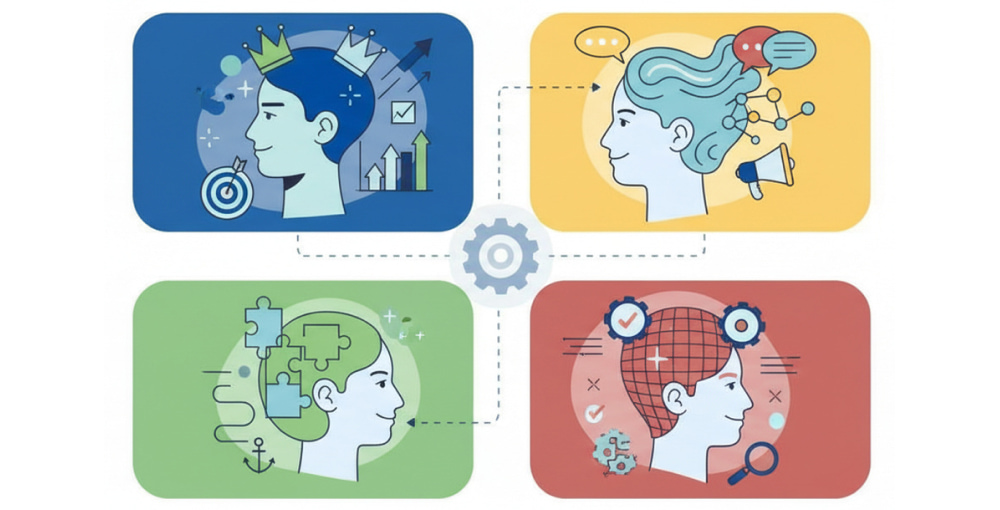
The DISC model typically describes four behavioral dimensions: Dominance, Influence, Steadiness, and Conscientiousness. Dominance emphasizes decisiveness and results; Influence centers on social energy and persuasion; Steadiness reflects patience and reliability; Conscientiousness highlights accuracy, analysis, and quality. Each person blends these dimensions in unique proportions, which is why two people with similar job titles can interact in dramatically different ways. When you understand your blend, you DISCover where you naturally thrive and where adaptation will yield stronger outcomes.
When a professional studies their DISC personality profile, they gain a snapshot of tendencies under normal and stressful conditions alike. This lens helps identify triggers, tight deadlines, unclear expectations, or ambiguous authority, that can derail performance. For practitioners and coaches, carefully designed DISC personality profile testing enables nuanced development plans, actionable feedback loops, and tailored communication playbooks that improve collaboration.
- Dominance: thrives on challenge, speed, and autonomy; may overlook details when momentum is prized.
- Influence: energizes teams through optimism; may need structure to maintain follow-through.
- Steadiness: stabilizes processes and relationships; may resist abrupt changes without rationale.
- Conscientiousness: elevates standards and rigor; may overanalyze when timelines are tight.
Real-World Benefits for Teams, Leadership, Sales, and Culture
Organizations adopt DISC to solve practical problems: miscommunication in cross-functional projects, friction between speed and quality, or confusion around decision-making styles. By making behaviors visible, teams can align processes with human reality. Sales professionals tailor DISCovery questions to client preferences, service teams match their tone to customer stress levels, and project managers calibrate updates to stakeholder appetite for detail. Beyond workflows, the model builds empathy, because it shows that difference is not dysfunction; it is diversity of contribution.
For managers, a thoughtful DISC personality profile assessment informs coaching rhythms, meeting design, and performance feedback that actually lands. For learners seeking a light-touch entry point, a concise DISC personality quiz can spark curiosity and motivate deeper exploration through guided debriefs and peer DISCussions.
- Speed up hiring calibration by comparing role demands with candidate strengths.
- Boost engagement by aligning recognition with what each style values.
- Reduce rework by matching task types to natural preferences for pace and detail.
Interpreting Results Responsibly and Avoiding Common Pitfalls
Assessment results are a starting line, not a finish line. The wisest application pairs insights with context: role expectations, organizational norms, and situational pressures. Labels should never become limits; individuals flex across contexts, and growth happens at the edges of comfort. Scores describe tendencies, not talent, and certainly not worth. A robust debrief explores interactions between dimensions and surfaces concrete adaptation strategies for meetings, emails, conflict, and decision cycles.
For enterprise rollouts, cross-validating multiple sources, observations, feedback, and structured DISC personality assessments, produces stronger insights than any single data point. When teams want a succinct starting place, a carefully administered DISC personality profile test can reveal meaningful patterns that feed into coaching roadmaps, communication agreements, and team norms.
- Avoid stereotyping by focusing on situations, not just static labels.
- Use results to design experiments: tweak one behavior in one meeting, then review outcomes.
- Protect privacy and obtain consent, especially when sharing reports across teams.
Getting Started, Choosing Tools, and Making Insights Stick
Effective adoption begins with intent: What problem are you trying to solve, faster decisions, clearer handoffs, or more consistent service? From there, choose tools that fit your scale and budget, then plan debriefs that convert data into daily habits. Micro-learning keeps momentum: short scenario practice, role-play, and manager huddles that tie behaviors to business metrics. Finally, embed the language in rituals, project kickoffs, retrospectives, and 1:1s, so insights become muscle memory rather than shelfware.
Self-guided learners may prefer digital options, and many platforms offer a DISC personality test online free experience that introduces core concepts without barriers. For teams that value curated rigor, an accredited practitioner might recommend a structured pathway that includes a free DISC personality test as an entry step, followed by workshops and coaching sessions that anchor skills in real projects.
| Style | What Energizes | Communication Tip | Watch Out For |
|---|---|---|---|
| Dominance | Decisive action and bold goals | Lead with the headline, then details | Impatience that overlooks constraints |
| Influence | Connection, brainstorming, momentum | Keep it upbeat and collaborative | Overpromising without a plan |
| Steadiness | Harmony, dependability, steady pace | Provide context and time to process | Resistance to abrupt shifts |
| Conscientiousness | Accuracy, structure, clear standards | Offer data and rationale upfront | Analysis that delays decisions |
- Set a cadence for reflection: weekly wins, challenges, and adjustments tied to style awareness.
- Pair styles intentionally in projects so speed and quality complement rather than compete.
- Revisit norms quarterly as roles change, projects evolve, and market dynamics shift.
FAQ: Common Questions About DISC
What does DISC measure, and how is it different from personality traits?
DISC focuses on observable behavior, how you respond to problems, people, pace, and procedures, rather than deep-seated traits. It highlights preferred communication and decision styles, which can flex with context. The value lies in translating patterns into practical actions you can use today.
Can I use DISC for hiring decisions?
Use it ethically as one input among many, never as a gatekeeper. Structured interviews, work samples, and reference checks should outweigh any single data source. When used responsibly, it helps teams understand fit with role demands and where onboarding support will be most impactful.
Is there a quick way to explore DISC before investing in a full program?
Many learners begin with concise tools, and an accessible option is a DISC personality test free resource that offers a preview before deeper facilitation. After a quick start, organizations often add workshops and coaching to ensure insights translate into repeatable habits.
How can teams keep DISC from becoming a stereotype?
Anchor observations in behaviors and situations, not identities. Encourage people to describe what they need in specific contexts, tight deadlines, high-stakes presentations, or complex analysis, and design norms that support everyone. Rotating meeting roles and shared retrospectives help prevent pigeonholing.
Are there options suitable for classrooms or community groups?
Educators and facilitators often prefer approachable materials, and some programs provide a DISC personality types test free starter that sparks DISCussion without complexity. After the initial exposure, guided debriefs and practical scenarios help participants apply the language in real interactions.