
Understanding DISC Profile: A Comprehensive Guide to Behavior and Communication
Take DISC Personality Assessment
Get StartedWhat DISC Brings to Modern Teamwork and Leadership
Behavioral frameworks help teams communicate with clarity and speed. In practice, the DISC profile offers a simple language for describing how people prefer to act under pressure and during collaboration. Rather than guessing motives, you can observe patterns and translate them into actionable insights. This article explores origins, mechanisms, and modern applications grounded in evidence and real-world management.
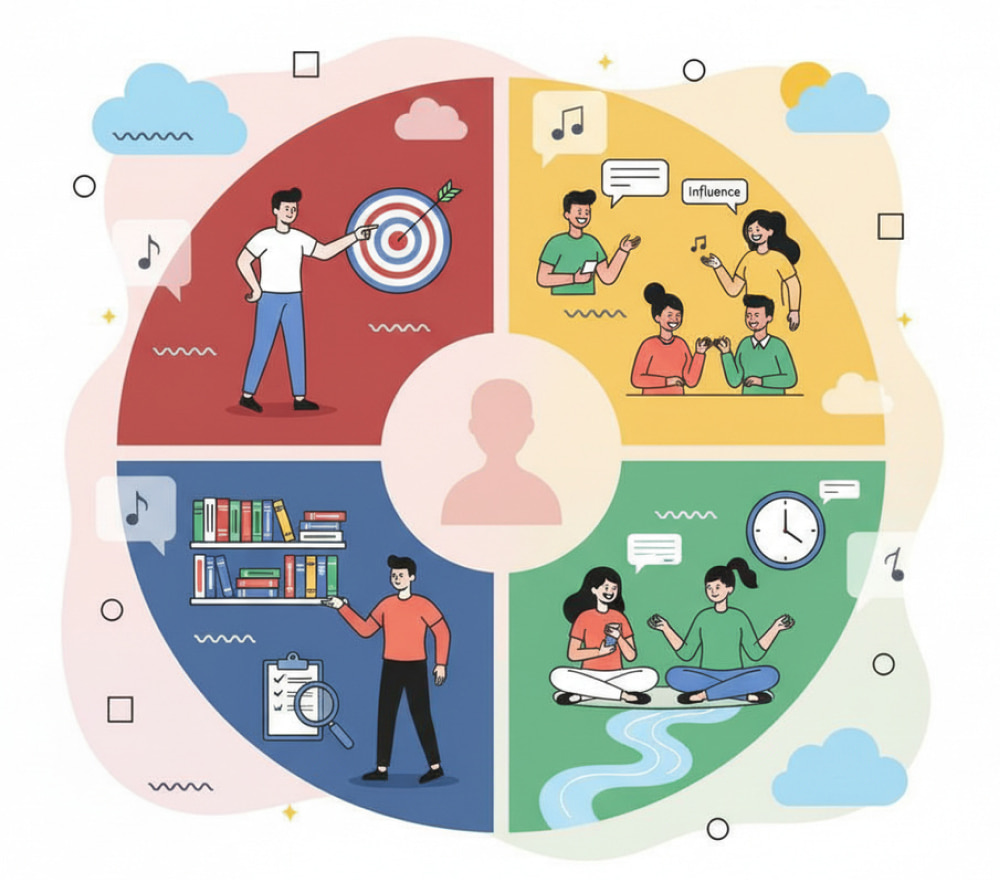
Managers, coaches, and HR leaders rely on a shared lexicon to reduce friction and boost momentum. Within that lexicon, the DISC profile definition captures four primary behavioral tendencies that manifest as dominance, influence, steadiness, and conscientiousness. Each dimension reveals typical energy, pacing, and attention focus, which helps align tasks with strengths. When used ethically, the model augments empathy, calibrates expectations, and accelerates onboarding.
- Faster alignment on goals, roles, and decision rights across functions
- Clearer communication norms that reduce rework and misinterpretation
- Sharper self-awareness that guides career moves and skill investments
How the Model Works and the Science Behind Behavioral Tendencies
Under the hood, the theory maps observable behaviors to situational demands. In many teams, a DISC personality profile becomes a conversational anchor for DISCussing preferences without labeling character. By focusing on context and behavior, practitioners avoid deterministic thinking while still naming tendencies. This balance keeps conversations constructive, specific, and growth-oriented.
Visual models make the concepts tangible during workshops and coaching. One of the most helpful visuals, the DISC profile wheel, plots scores around a circular map to show cluster proximity and likely communication dynamics. By seeing where colleagues land, teams forecast friction points and design complementary pairings for key projects. The format clarifies why some roles energize certain people and drain others.
- Dominance correlates with decisive action and rapid prioritization under ambiguity
- Influence emphasizes social energy, storytelling, and momentum building
- Steadiness reflects reliability, listening, and tempo control in turbulent contexts
- Conscientiousness favors precision, standards, and systems thinking for quality
Benefits for Organizations, Leaders, and Cross-Functional Teams
Organizations crave tools that translate quickly into behavior change. For that reason, a thorough DISC profile analysis can reveal leverage points for leadership development, sales playbooks, and service interactions. By tying strengths to role-critical outcomes, leaders turn abstract ideas into measurable experiments. The result is a practical, respectful blueprint for continuous improvement.
Another advantage is the shared language that enables scalable coaching. When teams embrace a structured DISC personality profile assessment, they can craft meeting norms, feedback rituals, and delegation strategies that minimize friction. Cross-functional groups adopt checklists and scripts that fit their blend of styles. As psychological safety grows, experimentation increases and cycle time drops.
- Role design aligns focus areas with natural strengths for sustainable performance
- Customer-facing playbooks adapt messaging to decision styles for higher win rates
- Project cadences balance speed with quality by matching tasks to cognitive modes
Taking an Assessment: Process, Formats, and Preparation Tips
Taking an evaluation should feel straightforward and respectful of privacy. Most providers deliver a concise DISC profile test with clear instructions, neutral wording, and a realistic completion time. Before starting, find a quiet space, silence notifications, and answer instinctively rather than strategically. Consistency matters less than authenticity, because the goal is self-awareness, not perfection.
| Format | Typical Length | Proctoring | Best For |
|---|---|---|---|
| Online self-serve | 12–20 minutes | Unproctored | Individual insight and quick team rollouts |
| Facilitated group | 60–120 minutes | Coach-led | Workshops, retrospectives, and off-sites |
| Enterprise integrated | Varies | Policy-based | Large-scale programs with learning systems |
Preparation and follow-through amplify the value of the results. In many organizations, guided DISC profile testing is paired with debriefs, reflection prompts, and action plans that translate findings into new habits. Schedule a coaching session within a week, and collect real examples to validate or refine the narrative. Finally, document commitments and revisit them during one-on-ones to reinforce momentum.
- Set a clear intention for what you want to learn before you begin
- Capture immediate reactions right after viewing your results to preserve candor
- Pick one behavior to start, one to stop, and one to continue for tangible progress
Interpreting Results and Avoiding Common Pitfalls
Numbers and graphs are only the beginning of a useful conversation. To avoid bias, practitioners treat DISC personality profile testing as a snapshot of behavior under typical conditions rather than a verdict on identity. Context shifts can flex how people show up, and that nuance should be DISCussed openly. Leaders then shape environments that draw out the best in everyone.
Misinterpretation usually comes from overgeneralization and shortcuts. A healthy practice is to pair insights from a DISC personality profile test with 360 feedback, observation notes, and goal metrics before making decisions. By triangulating data sources, you reduce error and increase perceived fairness. That rigor boosts trust and strengthens adoption across the company.
- Never treat styles as fixed labels or excuses for poor behavior
- Balance preferences with role requirements and business constraints
- Validate conclusions with observable evidence and agreed-upon metrics
FAQ: Practical Answers for First-Time Users
What does a DISC report include?
Most reports summarize dominant tendencies, motivators, stressors, and communication tips. Beyond charts, a modern DISC profile assessment delivers narrative explanations, do-and-don't lists, and development prompts for daily work. Some versions add team overlays and role-specific advice.
How accurate is the model for predicting success at work?
Accuracy improves when the tool is used to inform coaching, not to dictate outcomes. Behavioral preferences interact with culture, resources, and leadership, so context always matters. When results are combined with goals, feedback, and support, the insights become both reliable and actionable.
Can I try DISC without committing to a paid program?
Many providers share sample content, short screeners, or limited-access demos to illustrate the experience. For exploratory learning, a reputable DISC profile free test can spark reflection and set a baseline for deeper DISCussion. If you later choose a full report, you can compare insights and refine your plan.
Should hiring decisions rely on DISC scores?
Selection should consider competencies, experience, values, and evidence of performance under real conditions. Behavioral preferences can inform onboarding and management style, but they should not be the sole basis for hiring decisions. A structured process that blends multiple signals preserves fairness and reduces bias.
How often should results be revisited or updated?
Revisiting insights during role changes, new team formations, or major strategy shifts keeps the guidance relevant. Many organizations schedule a refresh annually or after significant transitions to capture evolving demands. Regular check-ins encourage continuous learning and prevent stale assumptions from guiding choices.